Blog
What Are First Copy Watches? Meaning, Quality Grades and Everything You Need to Know

What Are First Copy Watches?
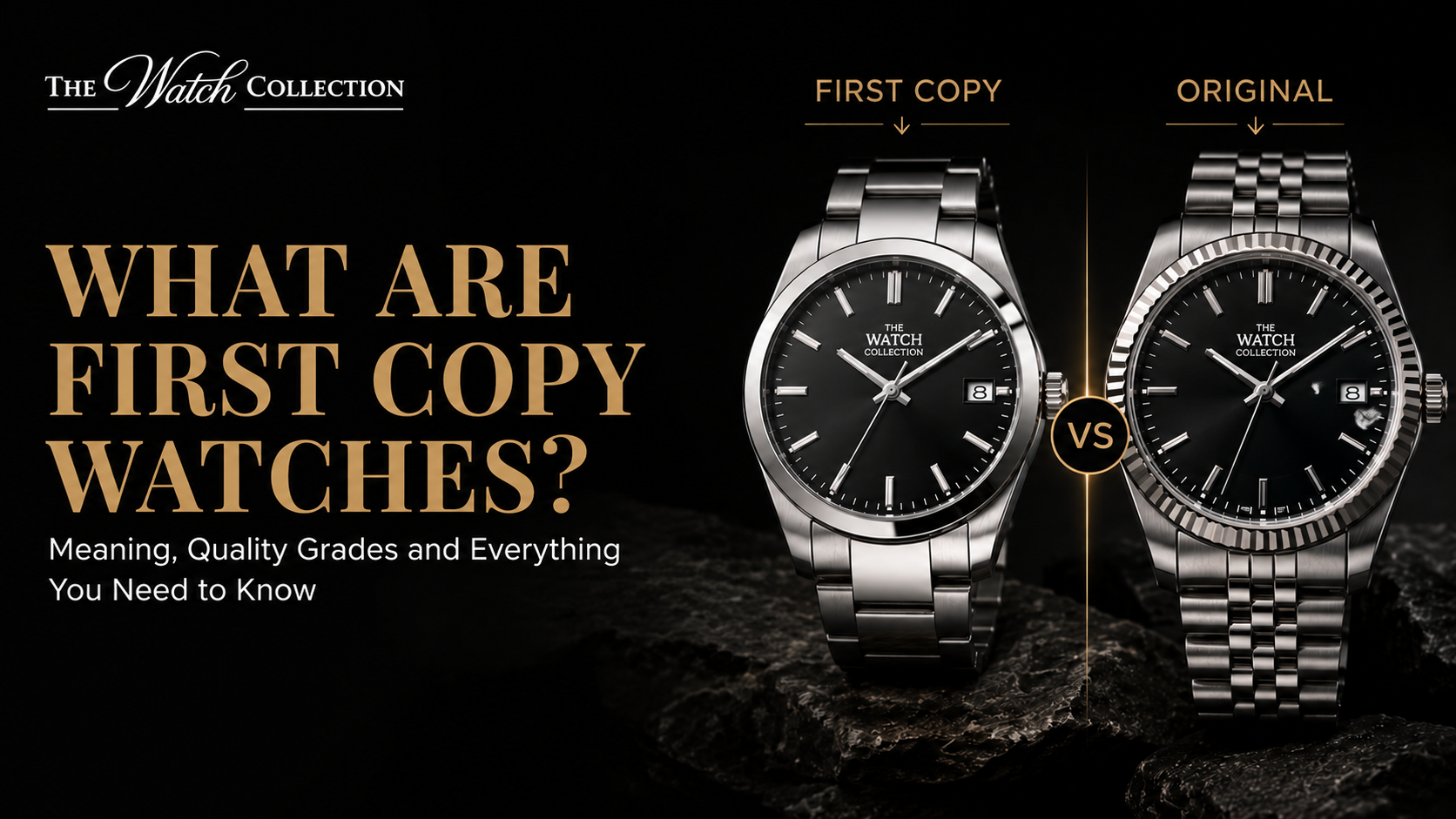
A first copy watch is a timepiece manufactured to closely resemble a branded luxury original in design, dial layout, and case shape, while using different internal components and materials than the original. The term is widely used across India to describe this category of replica watch, distinct from counterfeit goods sold deceptively as genuine.
If you have come across terms like “1st copy,” “high copy,” “7A quality,” or “master copy” while shopping for watches online and wondered what they actually mean, this guide covers everything — from the basic definition to quality grading, pricing, and what to realistically expect before you buy.
What Does “First Copy” Actually Mean?
The phrase “first copy” originated in South Asian markets and has become the standard term for design-accurate watch replicas across India. It refers to a watch built to visually replicate a luxury brand’s design — the dial, case shape, bezel, bracelet, and overall silhouette — without using the original’s patented movement, certified materials, or in-house manufacturing process.
Importantly, a first copy is sold transparently as a replica. Buyers know they are purchasing a design-accurate alternative, not a genuine product. This openness is what separates the first copy market from counterfeit fraud, where a fake item is deliberately misrepresented as authentic to deceive a buyer into paying original prices.
You will also come across related terms while browsing — “duplicate watch,” “clone watch,” “copy watch,” and “master copy” are all used somewhat interchangeably in casual conversation and listings, though they technically describe slightly different points along the same quality spectrum.
Why Do People Buy First Copy Watches?
The appeal is straightforward: the same visual identity that makes a luxury watch desirable, available at a fraction of the original price. A Rolex Submariner retails above ₹8,00,000 in India; a quality first copy of the same design is available for a few thousand rupees. For most buyers, owning the original was never realistically on the table — the first copy offers the design, the wrist presence, and the recognisability without the financial barrier.
This makes first copy watches popular across a wide range of buyers — students wanting a stylish daily piece, professionals wanting a polished look for the office, and watch enthusiasts who appreciate a brand’s design language even without access to the original.
Understanding Quality Grades
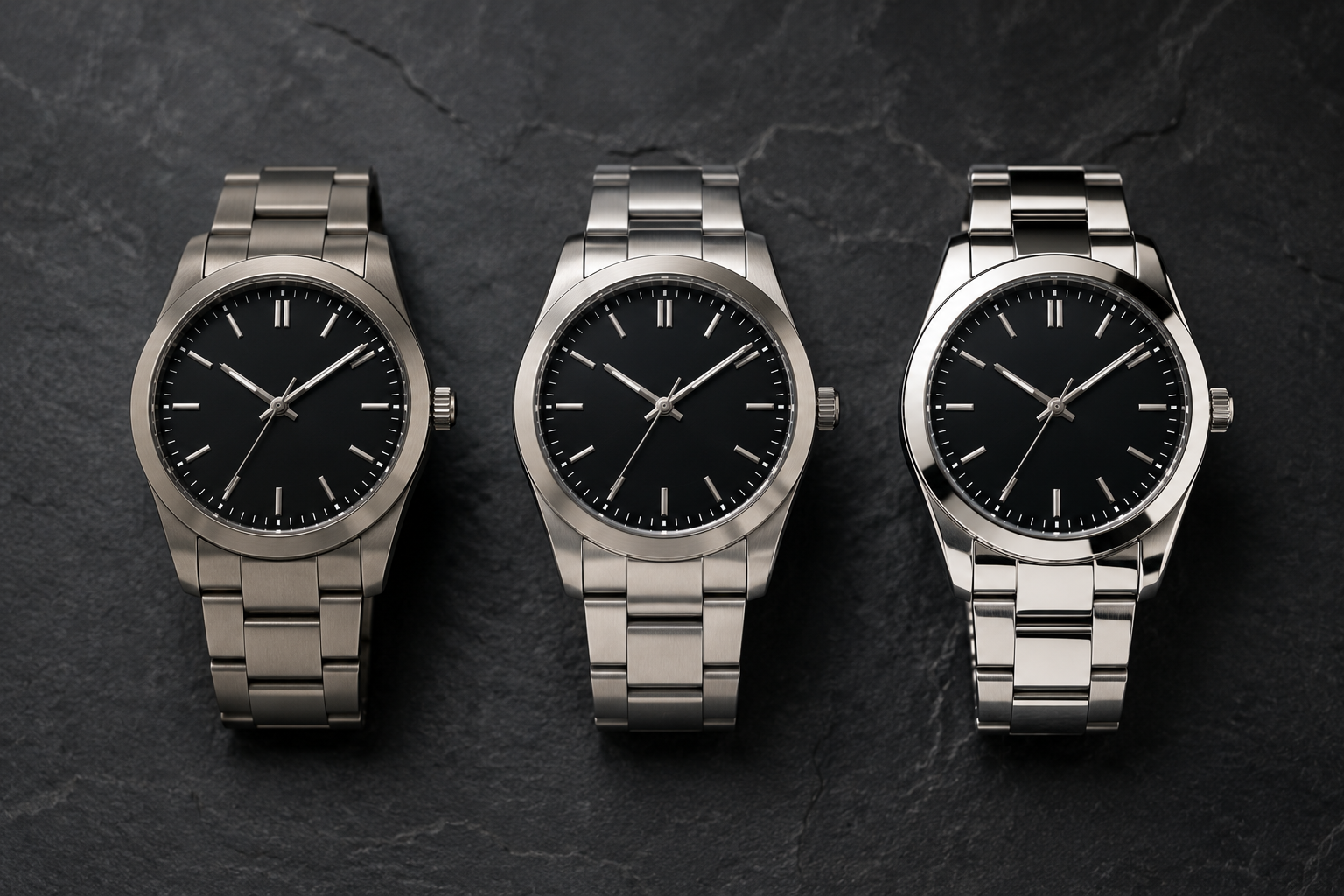
Quality grade is the single most important concept to understand before buying a first copy watch, since it affects price, materials, movement, and how convincingly the piece replicates the original.
Standard Grade, generally priced from ₹500 to ₹2,500, sits at the entry level. These use basic quartz movements, simpler alloys, and less refined dial printing. They suit casual or occasional wear, gifting, or buyers testing a style before committing to a higher grade.
AAA Quality, typically ₹2,500 to ₹6,000, represents a meaningful step up. Dial finishing is noticeably sharper, bracelet construction uses more solid links, and automatic movement options become available. For regular daily wear, most buyers find their comfort zone at this tier.
7A Quality, starting around ₹6,000 and reaching ₹15,000 or more for complex references like chronographs, is the highest grade commonly available. These use denser steel alloys, sapphire-coated crystal, and significantly refined movements. At this level, distinguishing the piece from an original typically requires close inspection of weight, case back detail, and movement sound.
| Grade | Typical Price Range | Movement | Best Suited For |
|---|---|---|---|
| Standard | ₹500 – ₹2,500 | Basic quartz | Casual wear, gifting, first-time buyers |
| AAA Quality | ₹2,500 – ₹6,000 | Quartz or basic automatic | Daily wear, balanced value |
| 7A Quality | ₹6,000+ | Refined automatic or quartz | Buyers prioritising close accuracy to original |
What “7A Quality” Specifically Means
7A quality is one of the most searched and least understood terms in this category. It refers to a specific, higher production grade within the first copy market — generally indicating better alloy quality, sharper dial finishing, and improved movement stability compared to standard or even AAA grade pieces.
The term itself does not have a single, universally regulated definition the way official watch certifications do — it functions more as an industry-recognised quality tier within the first copy trade. Because of this, it is worth confirming exactly what a specific seller means by “7A” rather than assuming it guarantees an identical standard across every listing using the term.
First Copy vs Super Clone — What’s the Difference?
“Super clone” is a term used more in global first copy markets, referring to the highest-effort replicas — built to match the original’s weight, movement architecture, and sometimes even serial number formatting as closely as physically possible. Super clones generally sit above 7A quality in both price and accuracy, though the term is used less commonly in Indian listings than 7A or AAA.
For most buyers in India, 7A quality represents the practical ceiling of what is widely and affordably available, with true super clone-level pieces being a smaller, more specialised, and considerably more expensive segment of the market.
Movement Types in First Copy Watches
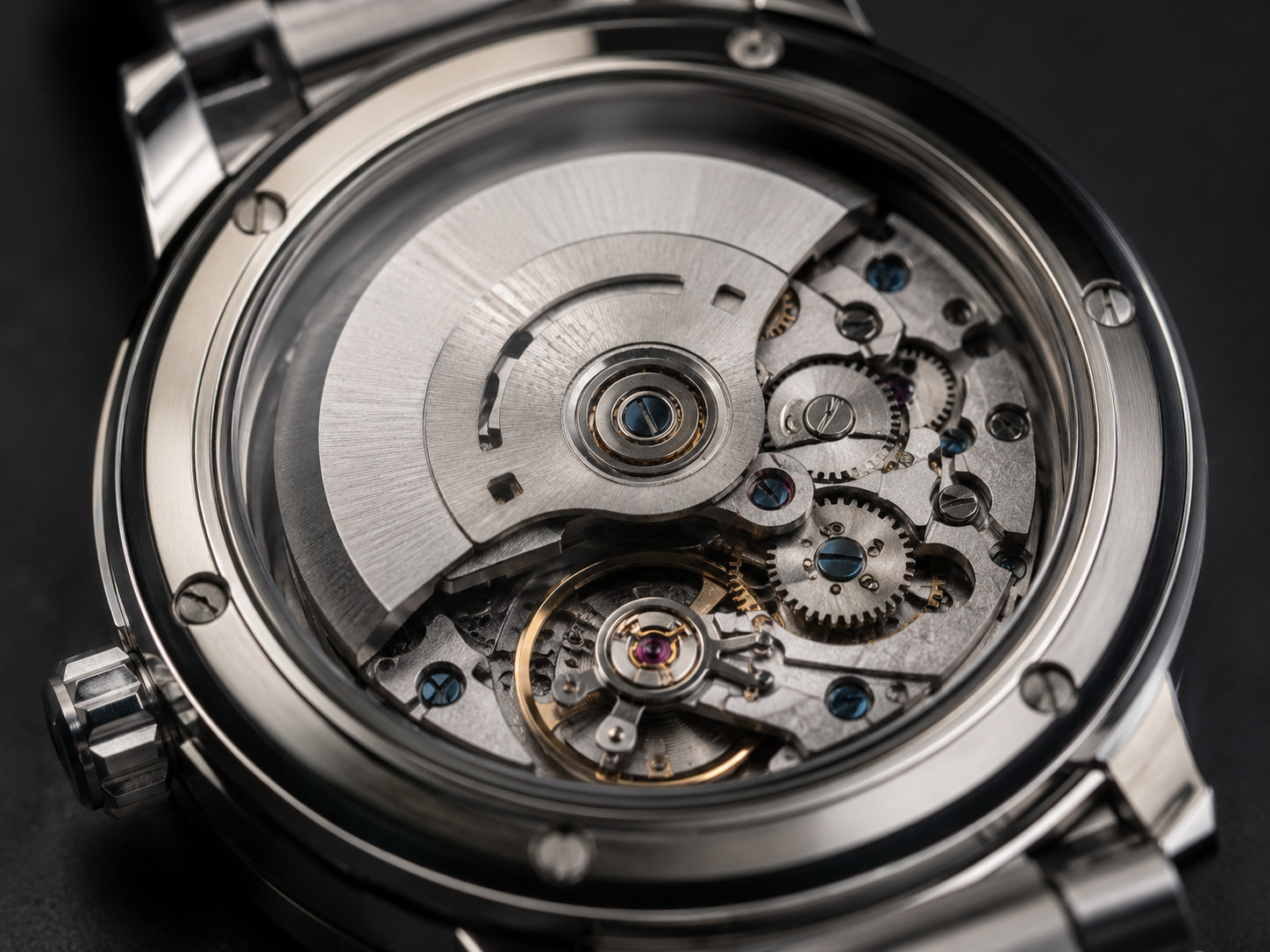
Beyond quality grade, movement type is the second major factor shaping a first copy watch’s price and experience.
Quartz movements are battery-powered, the most common and affordable option. They tick in distinct one-second steps and offer consistent, low-maintenance timekeeping.
Automatic movements are self-winding mechanical movements powered by wrist motion, replicating the smooth sweeping seconds hand associated with luxury originals. These cost more to produce and generally sit in the mid-to-premium price brackets.
Chronograph styling — multiple subdials on the dial face — can be either purely decorative or genuinely functional, depending on grade. Many original branded watches themselves use decorative subdials, so a first copy replicating that same visual layout is not necessarily cutting a corner; it is often matching the original’s actual design.
What Buyers Should Realistically Expect
Setting accurate expectations is the single biggest factor in buyer satisfaction within this category. Even at the highest available grade, a first copy watch will not match an original’s movement precision, material density, or long-term durability — these are not flaws, but the fundamental trade-off the category is built around.
What a quality first copy reliably delivers is visual accuracy, respectable build quality for its price point, and a genuinely satisfying daily-wear experience. Buyers should also expect some variation across sellers, since the same stated grade can mean different things depending on where it is sourced — which is why clear product photography and transparent grading matter more in this category than in most other retail purchases.
How First Copy Differs From Counterfeit Products
It is worth being precise about this distinction, since the two terms are sometimes confused. A first copy watch is sold openly as a replica, with both buyer and seller aware of exactly what is being purchased. A counterfeit product, by contrast, is deliberately marketed and sold as a genuine, authentic item — typically at prices close to or matching the original — specifically to deceive the buyer.
This distinction matters both practically and legally. The first copy market operates on transparency; counterfeit sales depend on misrepresentation. Understanding this difference helps buyers approach the category with the right expectations and avoid sellers who blur this line dishonestly.
Choosing the Right First Copy Watch for You
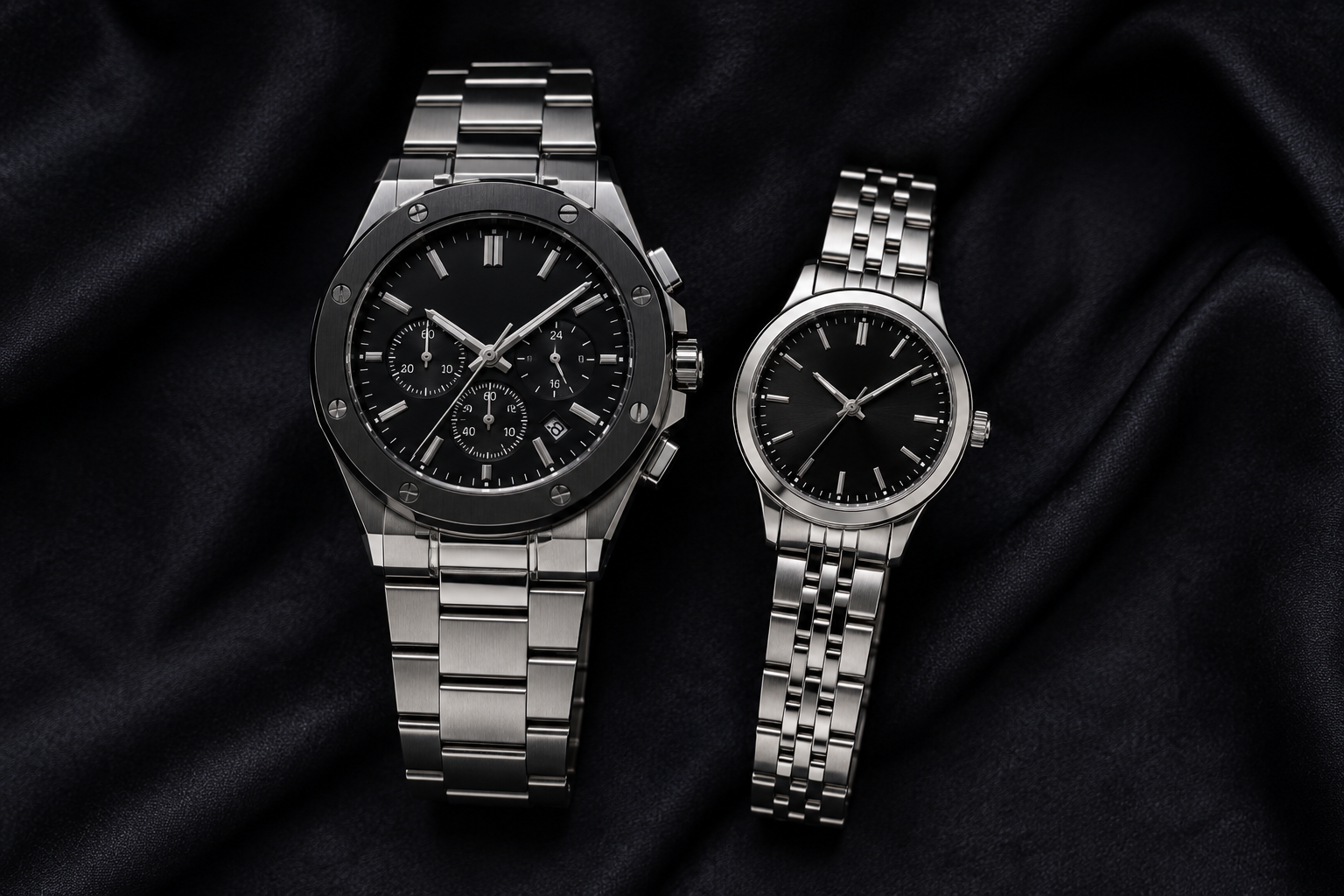
With grading and movement type understood, choosing the right piece comes down to matching grade to purpose. A watch for occasional wear or gifting rarely needs to go beyond standard or AAA grade. A watch intended for daily wear over several years justifies the extra cost of 7A quality, particularly if automatic movement feel matters to the buyer.
Brand choice also affects how convincingly a first copy performs at any given grade. Brands with clean, structurally simple designs — fewer intricate complications, simpler dial printing — tend to translate more accurately into first copy form than brands with elaborate detailing, since there is less fine work to potentially get wrong.
Buyers exploring first copy watches for men will find the widest range of sports and chronograph-style designs, while first copy watches for women spans everything from minimalist dress pieces to bolder, crystal-detailed statement watches. Buyers working within a defined budget can also explore first copy watches under ₹3,000, where standard and AAA grade options are most concentrated.
Frequently Asked Questions
Q: What is the meaning of a first copy watch?
A first copy watch is a timepiece designed to closely resemble a branded luxury original in dial layout, case shape, and overall design, while using different materials and movement components than the original. It is sold openly as a replica, not misrepresented as genuine.
Q: What is the difference between first copy and original watches?
The main differences lie in the movement, materials, and manufacturing precision. Originals use proprietary movements, premium alloys, and certified craftsmanship, while first copies replicate the visual design using more accessible components at a fraction of the price.
Q: What does 7A quality mean in first copy watches?
7A quality refers to a higher production grade within the first copy market, generally featuring better alloys, sharper dial finishing, and improved movement stability compared to standard or AAA grade pieces. It is among the highest commonly available grades in India.
Q: Is buying a first copy watch the same as buying a counterfeit product?
No. A first copy watch is sold transparently as a replica, with the buyer fully aware of what they are purchasing. A counterfeit product is deliberately sold as genuine to deceive the buyer, which is a fundamentally different and dishonest transaction.
Q: How do I know which quality grade is right for me?
It depends on intended use. Standard or AAA grade suits occasional wear or gifting, while 7A quality suits buyers wanting a daily-wear piece that closely matches an original’s weight, finish, and movement feel over a longer period.
Read More:- How to Check the Quality of a First Copy Watch Before Buying