
Blog
How to Check the Quality of a First Copy Watch Before Buying

How to Check Quality of a First Copy Watch
Checking the quality of a first copy watch before buying comes down to five core inspections: dial printing accuracy, case weight, bracelet link construction, movement type, and case back detail. Together, these five checks reveal more about a watch’s actual grade than any seller’s description alone.
Most disappointment in this category does not come from buying a first copy watch itself — it comes from buying one without knowing what to look for first. This guide walks through exactly what to check, in the order that matters most, before any money changes hands.
Why Quality Checking Matters More Than Brand Choice
A first copy watch is built to resemble a luxury original in design, but the materials, movement, and finishing process used to create that resemblance vary enormously between sellers and grades. The same brand and model can be sold as a ₹900 standard grade piece or a ₹9,000 7A quality piece, and the only real difference between them is how carefully each of these five checks was executed during manufacturing.
Buyers who know what to inspect can judge a watch’s actual grade independently of what a listing claims, which removes most of the guesswork from buying online.
1. Check the Dial Printing First
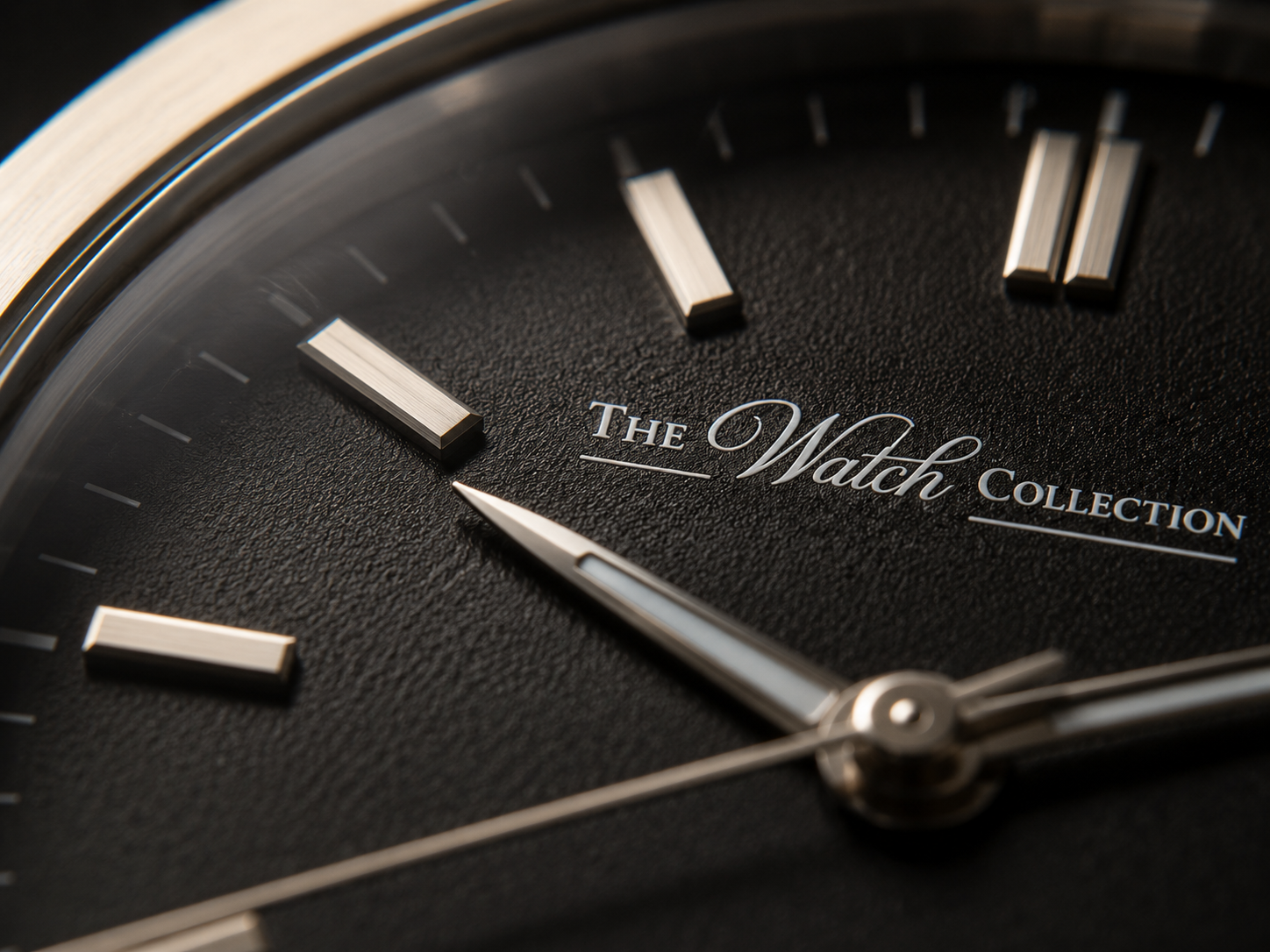
Sharp, evenly spaced dial printing is the fastest way to judge a first copy watch’s grade.
Dial printing is the fastest way to judge a first copy watch’s quality, and it requires no tools beyond good lighting and a close look.
On a well-made piece, text is sharp, evenly spaced, and consistent in depth across the entire dial. Numerals and brand markings sit precisely where they should, with no visible smudging or uneven ink application. Lume — the glow-in-the-dark coating on hands and markers — should be applied evenly, without bleeding outside its intended area.
Lower-grade pieces typically show slight misalignment in text spacing, thinner or uneven lume application, and a printing depth that looks flatter under angled light compared to the crisp, almost engraved look of higher-grade dials.
2. Weigh It in Your Hand
Weight is one of the most reliable indicators of material quality in a first copy watch, and it is something every buyer can judge immediately upon receiving the piece.
Original luxury watches typically use dense steel alloys — many premium brands use 904L stainless steel specifically for its weight and corrosion resistance. First copies built with lower-grade alloys feel noticeably lighter and, in some cases, slightly hollow when tapped gently against a hard surface.
A first copy that feels substantial, with a denser, more solid presence on the wrist, generally indicates a higher quality grade — typically AAA or 7A — where better alloys are used specifically to replicate this sensory detail.
3. Inspect the Bracelet Link Construction
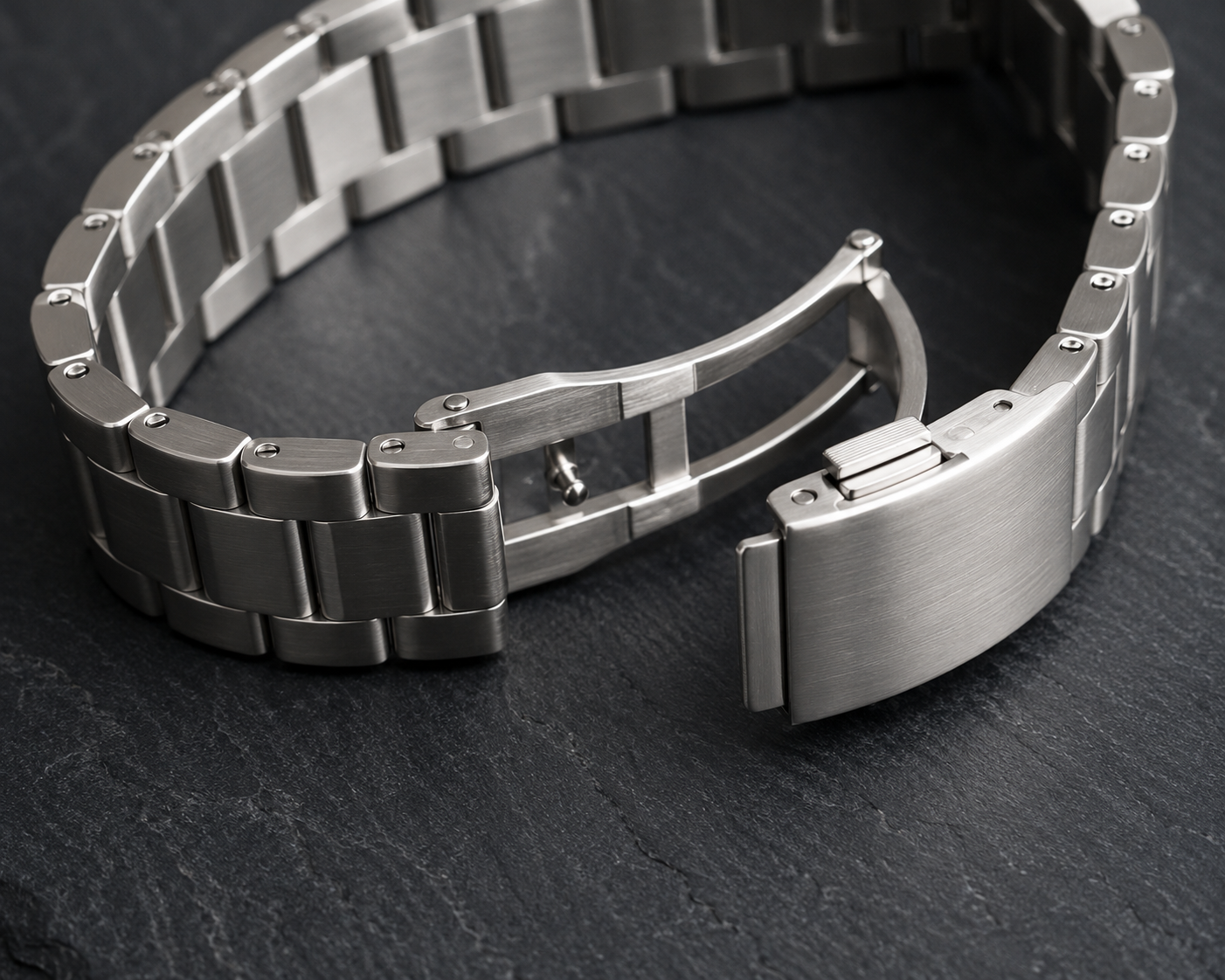
Bracelet quality is where many lower-grade first copy watches reveal themselves most clearly, because link construction is more expensive to get right than dial printing.
Solid links sit flush against each other with minimal visible gap and produce a smooth, continuous motion when the bracelet is flexed. Hollow links — common in standard grade pieces — often show visible seams, feel lighter, and can produce a faint rattling sound when shaken.
Check the clasp mechanism as well. A well-made clasp closes with a firm, single click and holds securely without needing extra pressure. A loose or wobbly clasp typically signals lower-grade construction throughout the rest of the bracelet too.
4. Confirm the Movement Type
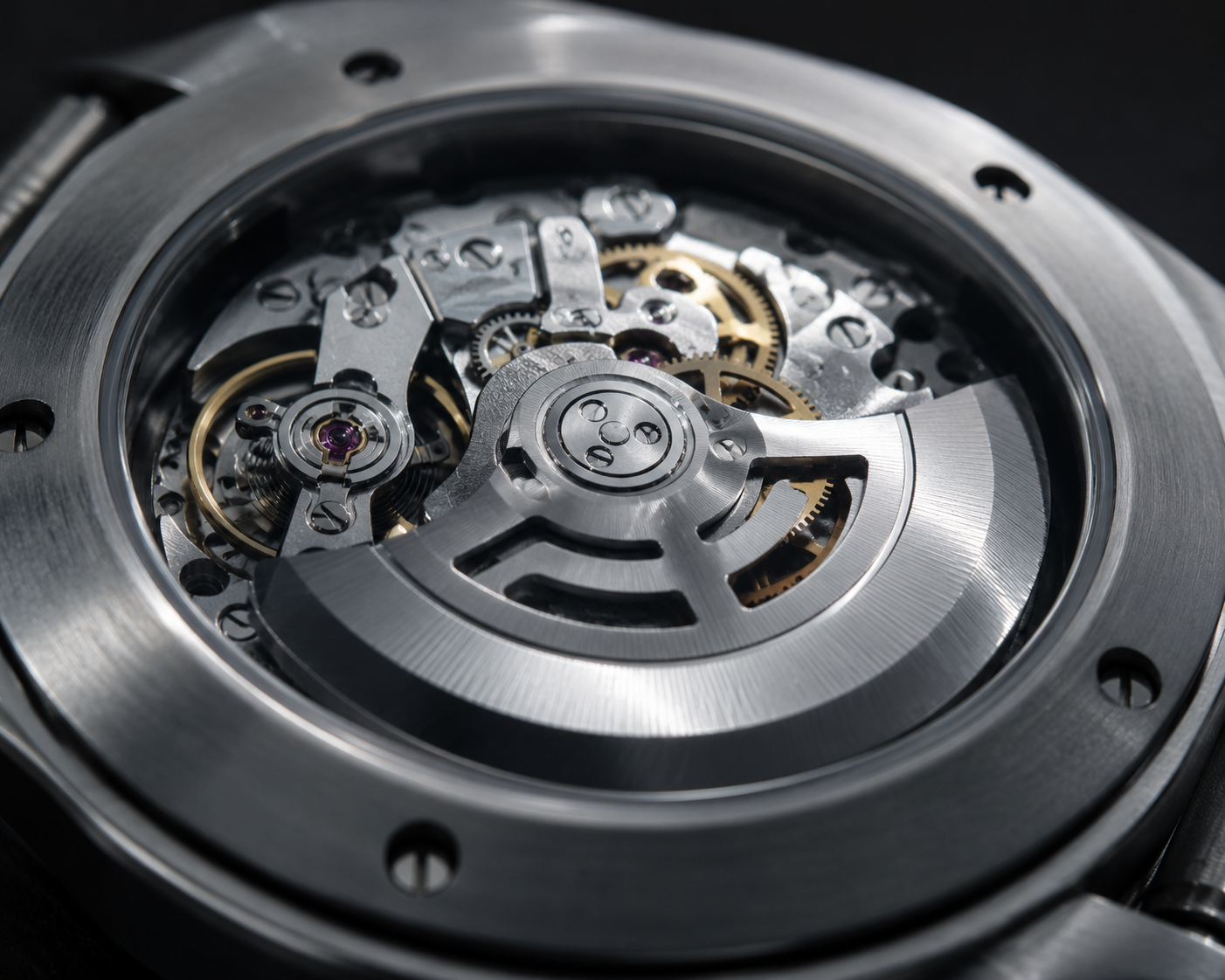
A smooth-spinning rotor visible through the case back is a sign of a better-finished automatic movement.
Movement type affects both the feel and the long-term experience of wearing a first copy watch, and it is worth confirming before purchase rather than discovering it afterward.
| Movement Type | How to Identify It | What It Means for Quality |
|---|---|---|
| Quartz | Seconds hand ticks in distinct one-second steps | Most affordable, consistent basic timekeeping |
| Automatic | Seconds hand sweeps smoothly and continuously | Higher cost, mimics luxury original’s mechanical feel |
| Chronograph (decorative) | Subdials present but do not function as a true stopwatch | Common in fashion-brand first copies; visual only |
| Chronograph (functional) | Subdials operate as a working stopwatch via pushers | Found mainly in higher 7A grade pieces |
A seller who clearly states which of these four applies to a specific listing is generally more trustworthy than one using vague terms like “premium movement” without further detail.
5. Examine the Case Back
The case back reveals two things: construction accuracy and, on automatic models, the movement itself.
Many luxury originals — particularly dive and sports watches — use a solid, screw-down case back. If a first copy of one of these references has an open, see-through case back instead, this is a clear deviation from the original design, even if the rest of the watch looks accurate.
On automatic models with a display case back, take a moment to watch the rotor spin when the watch is gently shaken. Smooth, consistent rotor motion suggests a better-finished movement. Jerky or inconsistent motion often indicates a lower-grade automatic mechanism.
Quick Reference: Five Checks at a Glance
- Dial printing — sharp text, even lume, no smudging.
- Case weight — denser feel signals better alloy quality.
- Bracelet links — solid links and a firm clasp over hollow, rattling construction.
- Movement type — confirm quartz, automatic, or decorative chronograph before buying.
- Case back — solid back on dive/sports models; smooth rotor motion on automatics.
How These Checks Map to Quality Grades
Standard grade pieces, typically priced under ₹2,500, will usually show visible weaknesses in at least three of the five checks above — most commonly dial sharpness, bracelet construction, and case weight. AAA quality, generally ₹2,500 to ₹6,000, performs noticeably better across all five, with hollow bracelet links being the most likely remaining weak point. 7A quality, starting around ₹6,000, is built to pass all five checks convincingly, which is why it commands the highest price within the category.
Buyers exploring first copy watches under ₹3,000 should expect a mix of standard and AAA grade options at that price point, making these five checks especially useful for distinguishing between listings that look similar in photos but differ meaningfully in person.
What to Ask a Seller Before Buying
A short, direct set of questions can resolve most quality uncertainty before a purchase is made. Ask specifically which quality grade the piece is — standard, AAA, or 7A — rather than accepting a vague description. Ask whether the movement is quartz or automatic, and if automatic, request a short video showing the rotor in motion. Request close-up photography of the dial, case back, and bracelet clasp specifically, since these three areas reveal the most about actual build quality.
A seller able to answer these questions clearly and provide accurate, specific photography is generally a safer bet than one offering only generic marketing language.
Frequently Asked Questions
Q1: What is the easiest way to check first copy watch quality without any tools?
The fastest check requires no tools at all — look closely at the dial printing under good light. Sharp, evenly spaced text and consistent lume application typically indicate a higher quality grade, while smudged or uneven printing signals a lower one.
Q2: Does a heavier first copy watch always mean better quality?
Generally, yes. Heavier first copy watches typically use denser steel alloys closer to what luxury originals use, which usually correlates with a higher quality grade. However, weight should be checked alongside dial and bracelet quality, not relied on alone.
Q3: How can I tell if a first copy watch has a real automatic movement?
Watch the seconds hand. A smooth, continuous sweep indicates an automatic movement, while a hand that ticks in distinct one-second steps indicates quartz. On models with a display case back, a gently shaken watch will also show the rotor spinning if it is genuinely automatic.
Q4: Are hollow bracelet links always a sign of poor quality?
Hollow links generally indicate a lower or standard quality grade, since solid link construction costs more to produce. They are not necessarily a sign of a non-functional watch, but they typically wear less comfortably and audibly rattle more than solid links over time.
Q5: Why do some first copy chronograph watches have subdials that don’t move?
Many fashion-brand first copy watches replicate a chronograph’s visual layout without including the mechanical components needed for the subdials to function. This mirrors many of the original branded watches themselves, which often use decorative subdials purely for design rather than working timing functions.
Read More: First Copy vs Original Watch: How to Spot the Difference (And Why It Matters)

One thought on “How to Check the Quality of a First Copy Watch Before Buying”