
Blog
7A Quality vs AAA Quality Watches — What’s the Real Difference?

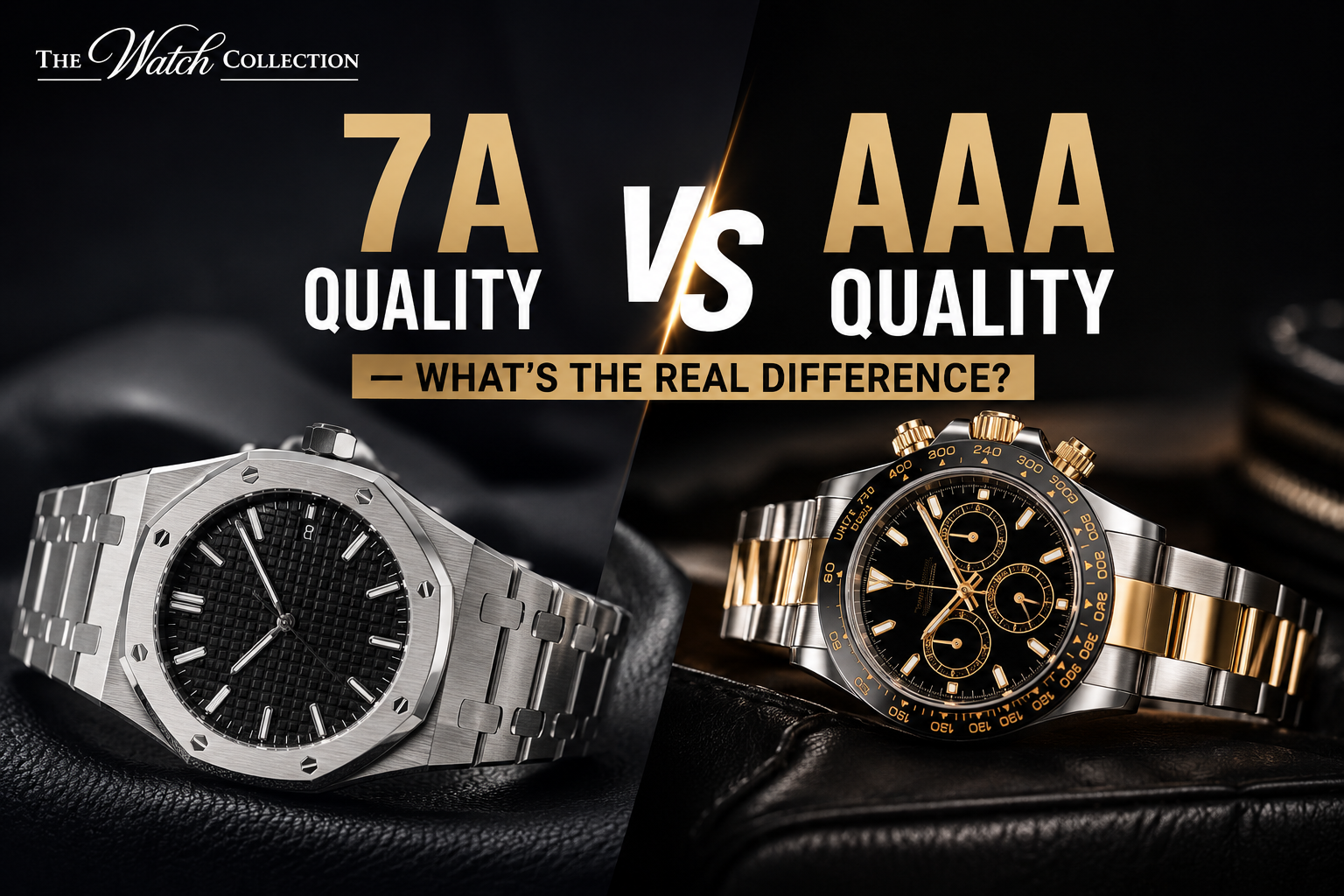
7A Quality vs AAA Quality Watches
7A quality watches are the highest production grade available in India’s first copy watch market — featuring denser steel alloys, refined automatic movements, sapphire-coated crystal, and finishing that requires close inspection to distinguish from an original. AAA quality sits one tier below, offering meaningfully better materials and dial accuracy than standard grade, but falling short of 7A in case weight, movement precision, and overall finish.
If you have been shopping for first copy watches and found yourself confused by terms like “7A quality,” “AAA,” “high copy,” and “master copy” — this guide breaks down exactly what each grade means, where the real differences show up in practice, and which grade makes sense for your specific needs.
Why Quality Grades Matter in First Copy Watches
The first copy watch market in India spans an enormous range of production quality — from ₹500 standard grade pieces that approximate a brand’s shape to ₹15,000+ 7A quality pieces that require a trained eye to distinguish from the original at a glance. The same brand, the same model, the same reference number can be produced at every point along this spectrum.
This means buying “a Rolex Submariner first copy” tells you almost nothing about what you are actually getting. Buying “a Rolex Submariner first copy in 7A quality with an automatic movement” tells you everything you need to make an informed decision.
Quality grades exist precisely to communicate this difference clearly, which is why understanding the grading system is the single most important thing any first copy watch buyer can learn — before brand, before model, before price.
What Is AAA Quality in First Copy Watches?
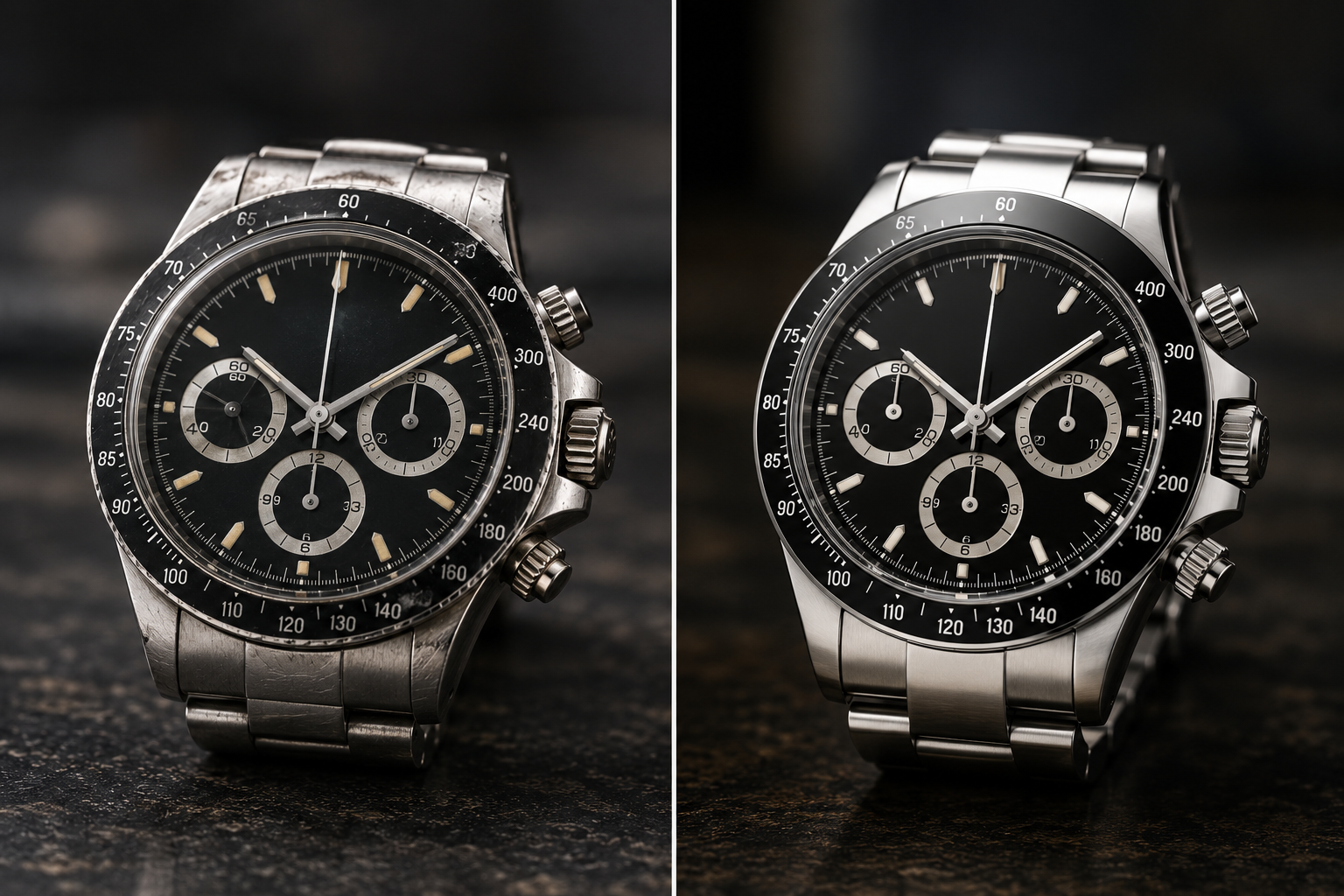
AAA quality is the middle tier of India’s first copy watch grading system — a meaningful step above standard grade in materials, dial accuracy, and bracelet construction, produced at a price point that suits daily wear buyers seeking genuine value.
At AAA quality, several things change noticeably compared to standard grade:
Dial finishing improves substantially. Text is sharper and more evenly spaced, lume application is more consistent, and subdial layouts on chronograph references align more accurately with the original’s proportions.
Bracelet construction uses solid links rather than the hollow links common in standard grade pieces. This affects both the feel and the durability — solid links sit flush against each other, move smoothly, and hold their shape over time.
Movement options expand. Automatic movements — not available or reliably finished at standard grade — become a practical choice at AAA quality, giving buyers access to the sweeping seconds hand associated with luxury originals.
Case alloy improves, though not to the density of 7A. AAA cases are heavier than standard grade but still noticeably lighter than 7A quality pieces when held side by side.
AAA quality typically covers the ₹2,500 to ₹6,000 price range across most brands and movement types, with first copy automatic watches sitting toward the higher end of this bracket.
What Is 7A Quality in First Copy Watches?
7A quality is the highest production grade widely available in India’s first copy watch market — built with denser alloys, sapphire-coated crystal, more refined automatic movements, and case finishing that makes it the closest available match to an original’s physical characteristics.
The “7A” designation does not come from any regulated external standard — it is an industry-recognised quality tier within the first copy trade itself, developed to differentiate the highest-grade production from the broader AAA and standard tiers below it.
At 7A quality, the differences from AAA become tangible across several dimensions:
Case weight increases noticeably. 7A pieces use alloys with higher density, producing a case that sits more substantively on the wrist — closer to what original luxury watches feel like in hand. This is often the fastest way to identify a 7A piece without any other information: it simply feels heavier and more solid.
Crystal quality moves to sapphire coating rather than mineral glass, improving scratch resistance and giving the crystal a clarity that lower grades cannot match.
Movement mechanics are refined. A 7A automatic movement produces smoother rotor action, more consistent timekeeping, and a better-quality winding feel compared to AAA automatic movements, which can have noticeably rougher rotor spin.
Dial precision reaches its highest point. At 7A, printing is genuinely crisp, lume is evenly applied, and on complex references like chronographs and skeletonised dials, the depth and dimensionality of the dial comes closest to the original.
Bracelet finishing on 7A pieces typically alternates between brushed and polished sections — a detail that lower grades either omit entirely or execute inconsistently.
7A quality typically starts at ₹6,000 and can reach ₹15,000 or more for complex references, particularly first copy luxury watches where the design demands higher precision.
Side-by-Side Comparison: 7A vs AAA vs Standard
| Feature | Standard Grade | AAA Quality | 7A Quality |
|---|---|---|---|
| Price Range | ₹500–₹2,500 | ₹2,500–₹6,000 | ₹6,000–₹15,000+ |
| Case Alloy | Basic, lightweight | Improved alloy | Dense, heavy alloy |
| Crystal | Mineral glass | Mineral glass | Sapphire-coated |
| Bracelet Links | Hollow | Solid | Solid, brushed/polished |
| Dial Printing | Basic, may smudge | Sharp, consistent | Precise, layered depth |
| Movement (Quartz) | Basic quartz | Quality quartz | Premium quartz |
| Movement (Auto) | Not recommended | Available, functional | Smooth, refined |
| Lume Application | Uneven | Even | Even, consistent depth |
| Case Weight Feel | Light | Medium | Dense, premium |
| Best For | Gifting, casual | Daily wear, value | Maximum accuracy |
Where the Difference Shows Up in Real Wear
Understanding the grade difference on paper is useful. Understanding where it actually matters in practice is more useful.
In hand, before wearing: Weight is the fastest tell. A 7A piece feels noticeably heavier and more solid than AAA, and significantly heavier than standard grade. If two pieces of the same reference are placed side by side, this distinction is immediate.
On the wrist during daily wear: Bracelet feel separates AAA from 7A most clearly. 7A solid links with brushed and polished finishing conform more naturally to wrist movement and maintain their shape over months of wear. AAA solid links perform well but may show minor wear at link edges faster.
Under close inspection: Crystal clarity and dial depth are where 7A’s sapphire coating and refined printing separate it from AAA. Under good light at close range, a 7A dial has genuine visual depth — particularly on chronograph references and luxury pieces with textured dials.
Over time: Automatic movement quality becomes increasingly relevant with extended ownership. 7A automatic movements maintain timekeeping accuracy and smooth rotor action more consistently than AAA automatics, which is worth considering for buyers planning long-term daily use.
Which Grade Should You Choose?
The honest answer depends on three factors: budget, intended use, and which brand or reference is being purchased.
Choose Standard Grade if: You want a presentable watch for occasional wear, gifting, or trying a style at minimal cost. Fashion brands — Fossil first copy, Tommy Hilfiger, Armani Exchange — at standard grade are generally acceptable for these purposes since their simpler designs are less demanding of high-grade finishing.
Choose AAA Quality if: You want a reliable daily-wear piece that looks genuinely good at a price that balances value and quality. This is the sweet spot for most buyers — particularly for first copy watches for men in sport and casual styles where the bracelet feel and dial accuracy matter more than they do in standard grade.
Choose 7A Quality if: You want the closest possible match to an original’s physical characteristics, you are buying a complex reference where lower grades fall noticeably short (chronographs, integrated bracelet designs, skeletonised dials), or you are planning long-term daily wear and want the most durable construction available in the first copy market.
For ultra-luxury references specifically — Rolex first copy, Patek Philippe, Richard Mille, Audemars Piguet — 7A quality is almost always the recommendation, since these designs expose the limitations of lower grades far more visibly than simpler references do.
For budget-focused buyers, exploring first copy watches under ₹3,000 gives a good sense of what AAA quality delivers at the lower end of that range before committing to a higher-grade purchase.
What About “High Copy” and “Master Copy”?

These two terms appear frequently in Indian first copy watch listings and cause significant confusion.
“High copy” generally refers to the same tier as upper AAA or 7A quality — a grade that prioritises design accuracy and better materials over price minimisation. The term signals premium quality within the replica segment but has no fixed, regulated definition. Different sellers use it differently, which is why confirming the specific grade (7A or AAA) matters more than trusting any label.
“Master copy” is used similarly, often as marketing language for 7A quality pieces or — occasionally — for genuine super clone pieces that go beyond standard 7A production in replicating the original’s movement architecture and weight. Super clone pieces are rarer, more expensive, and not widely available across all brands in India’s market.
The practical takeaway: always ask for the specific grade designation (standard, AAA, 7A) rather than relying on descriptive labels like “high copy” or “master copy” alone.
Brand-Specific Grade Recommendations
Not every brand requires the same quality grade to look convincing. Understanding which brands are more or less forgiving at lower grades saves buyers from overpaying — or underpaying and being disappointed.
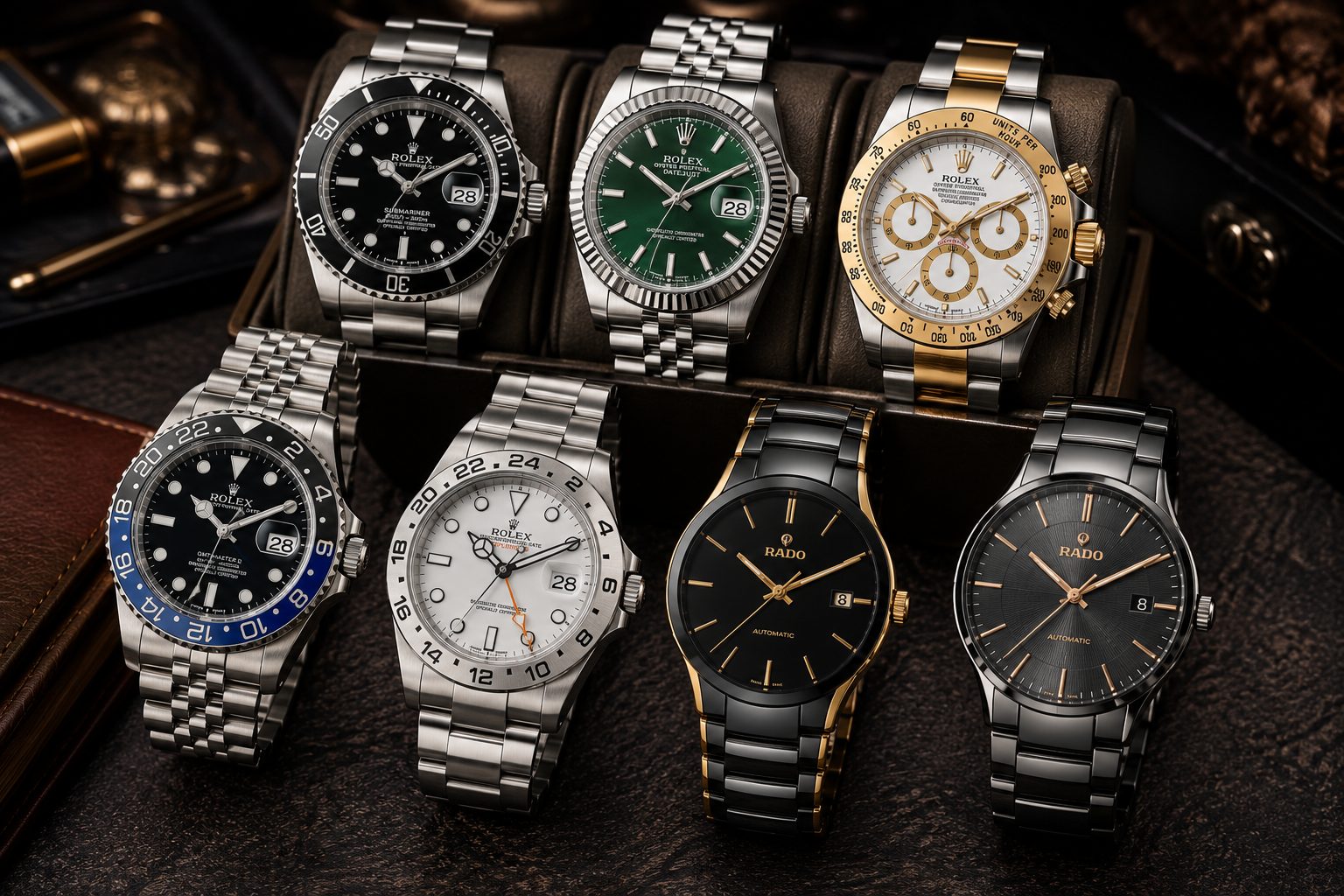
Brands that perform well at AAA: Tissot, Rado, Fossil, Tommy Hilfiger, Armani Exchange. These brands have cleaner, less complex designs that translate accurately at mid-grade production.
Brands that need 7A to look convincing: Rolex (particularly Datejust fluted bezel and jubilee bracelet), Omega Speedmaster chronograph, Audemars Piguet Royal Oak (tapisserie dial and integrated bracelet), Richard Mille (tonneau case curvature and skeletonised dial depth), Patek Philippe Nautilus (horizontal embossed dial texture).
First copy watches for women in crystal-set and fashion-brand styles can often satisfy at AAA grade, since the design appeal depends on sparkle and colour rather than the fine finishing details that demand 7A quality in Swiss luxury references.
Final Thoughts
The difference between 7A quality and AAA quality is real, measurable, and directly proportional to price — but neither grade is categorically “better” without considering what the buyer actually needs. AAA quality delivers excellent value for daily wear across most brands and references. 7A quality delivers the closest available match to an original’s physical experience for buyers where that last degree of accuracy matters.
Understanding this distinction before buying removes guesswork from the purchase entirely — and buyers who know which grade suits their specific brand, reference, and budget consistently walk away more satisfied than those who simply look for the lowest price on any listing that matches their desired model.
Frequently Asked Questions
Q: What does 7A quality mean in first copy watches?
7A quality refers to the highest production grade in India’s first copy watch market. It features denser steel alloys, sapphire-coated crystal, refined automatic movements, and the closest available match to an original’s case weight and dial finishing. It sits above AAA quality and below super clone level.
Q: Is 7A quality better than AAA quality?
Yes. 7A quality uses better alloys, improved crystal, and more refined movement mechanics than AAA quality. The difference is most noticeable in case weight, crystal clarity, and automatic movement smoothness. The price premium for 7A over AAA is typically ₹2,000 to ₹5,000 depending on brand and reference.
Q: What is AAA quality in first copy watches?
AAA quality is the middle tier of India’s first copy grading system. It offers solid bracelet links, sharper dial printing, and functional automatic movements at a price point between standard grade and 7A quality — typically ₹2,500 to ₹6,000. Most regular daily-wear buyers find AAA the best balance of quality and cost.
Q: What is “high copy” in watches?
“High copy” is an informal term used in India’s first copy watch market to describe upper-tier quality — generally equivalent to AAA or 7A grade. It signals better materials and finishing than standard grade but has no fixed, regulated definition. Always confirm whether a “high copy” listing specifically refers to AAA or 7A quality.
Q: Which brands need 7A quality to look convincing?
Brands with complex design elements — Rolex (fluted bezel, jubilee bracelet), Omega Speedmaster (functional chronograph subdials), Audemars Piguet Royal Oak (tapisserie dial and integrated bracelet), Richard Mille (tonneau case and skeletonised dial), and Patek Philippe Nautilus (embossed horizontal dial) — all benefit significantly from 7A quality over AAA, since their designs expose finishing limitations more visibly than simpler references.
Q: What is the price difference between 7A and AAA quality watches in India?
AAA quality first copy watches in India typically range from ₹2,500 to ₹6,000. 7A quality starts around ₹6,000 and can reach ₹15,000 or more for complex references. The premium reflects meaningfully better alloys, crystal, and movement mechanics rather than just a marketing label.
